How much electricity does a home lift use? Estimating running costs
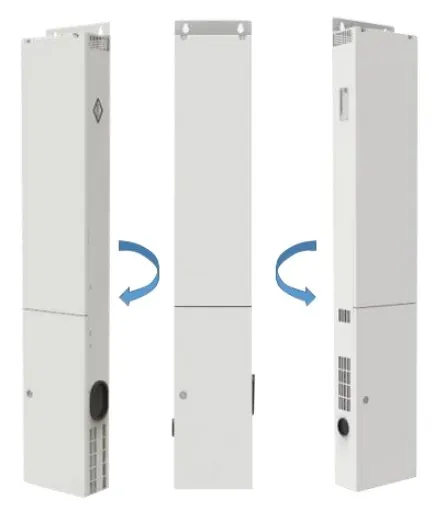
"Will a lift push up my electricity bill?" For homes, the answer often surprises people: a modern home lift uses less power than many familiar appliances, and a large share comes from standing by rather than from travelling.
1. Where a lift uses electricity
- When travelling: the machine, inverter, cabin lights and fan. A trip in a townhouse lasts only a few dozen seconds.
- On standby: the controller, displays, lights, fan and rescue battery charger run 24 hours a day.
Swiss data compiled by CIBSE show that some 150,000 lifts use about 300 GWh a year, of which around 160 GWh is standby energy. For home lifts that make few trips a day, the standby share is even higher.
2. Example estimate for a 5-storey townhouse
Assumptions: a 350 kg lift, a gearless machine of about 3 kW, each trip lasting 20 seconds at an average of about 40% of rated power, 30 trips a day; standby power 60 W; an assumed electricity price of VND 3,000/kWh.
| Item | Calculation | Energy / month |
|---|---|---|
| Travel | 3 kW × 40% × 20 s × 30 trips × 30 days | about 6 kWh |
| Standby | 60 W × 24 h × 30 days | about 43 kWh |
| Total | about 49 kWh ≈ VND 150,000 |
This is an illustrative example based on the assumptions above; actual consumption depends on the lift line, number of trips, temperature and standby settings.
The example shows that cutting standby power (switching off lights and fans when idle) matters far more than worrying about the energy per trip.
3. The VDI 4707 energy label
The VDI 4707 guideline of the Association of German Engineers rates lift energy efficiency from A to G using two components: standby demand (W) and specific travel demand (mWh/(kg·m)). For example, class A for standby is up to 50 W, while class G is above 1,600 W. Results are weighted by usage; the less a lift runs, the more standby demand counts in the rating.
4. Features that save energy
- Permanent-magnet gearless machine + VVVF inverter: high efficiency, soft starts.
- LED lighting and fan that switch off after a few minutes without calls.
- Sleep mode for the controller and displays.
- Regenerative drives (for high-capacity building lifts): a Hong Kong study found that 16 – 52% of energy can be recovered depending on conditions.
5. Running costs beyond electricity
- Scheduled maintenance under contract after the free maintenance period.
- Consumables: rescue batteries, rail oil, bulbs, light curtains.
- Periodic inspection fees as required by regulation.
Choosing genuine core equipment with spare parts stocked in Vietnam is the most effective way to keep running costs stable for years.
Frequently asked questions
How much does a home lift add to the monthly electricity bill?
For a townhouse with moderate use, usually a few dozen kWh a month, mostly from standby. The example in this article comes to about 49 kWh a month.
Does single-phase power use more electricity than three-phase?
Not significantly; the choice between single- and three-phase depends on the machine power and the house supply.
How can I reduce the lift's electricity cost?
Enable automatic switch-off for lights and fan; use a gearless machine with an inverter; avoid unnecessary empty trips.
- CIBSE – Barney on energy efficiency of lifts
- Elevator World – Energy labels for lifts based on guideline VDI 4707
- Cibes Lift Vietnam – 5 points for structural design of a house with a lift (motor power), in Vietnamese
This article is for general reference. Figures for each project follow the site survey and the lift supplier's drawings; regulations may be updated, so owners should check the original texts.

Engineers who survey and install home lifts at Vinhomes Ocean Park and Vinhomes Global Gate.