6 villa lift designs and installation tips for townhouses and villas 2026
A villa lift is more than a way to move between floors. It is part of the architecture: put it in the wrong place or pick the wrong lift type and the layout suffers; choose well and the lift becomes a feature. This guide covers 6 popular villa lift types, shaft sizes by rated load, and lessons ASAHI engineers have learned installing lifts at Vinhomes Ocean Park and Vinhomes Global Gate.
- Why a villa should have a lift
- 6 popular villa lift types
- Villa lift sizes by rated load
- Where to put the lift in a villa
- Cabin interiors and landing doors
- Japanese-configured joint venture or fully imported?
- What drives the cost of a villa lift
- Preparing for a villa lift installation
- Frequently asked questions
- ASAHI – villa lift installer
1. Why a villa should have a lift
Villas and terraced houses in new urban areas usually have 3 – 5 floors with generous floor heights. Climbing to the fourth floor every day is hard on grandparents, and carrying furniture, suitcases or laundry up and down is a chore.
A lift solves daily movement and makes the upper floors far more usable: the ancestral altar room, family room or roof terrace become easy to reach. A lift chosen to match the interior also adds to the value of the home when it is sold.
Families who should prioritise a lift:
- Elderly family members or anyone with limited mobility or using a wheelchair.
- Young children, with prams and baby gear carried up and down.
- Houses of 4 floors or more, with living rooms or an altar room on upper floors.
- Shophouses that move goods between floors.
2. 6 popular villa lift types
These are the lift lines ASAHI installs most often in villas and townhouses, with their strengths and when to choose each.
2.1. Traction home lift
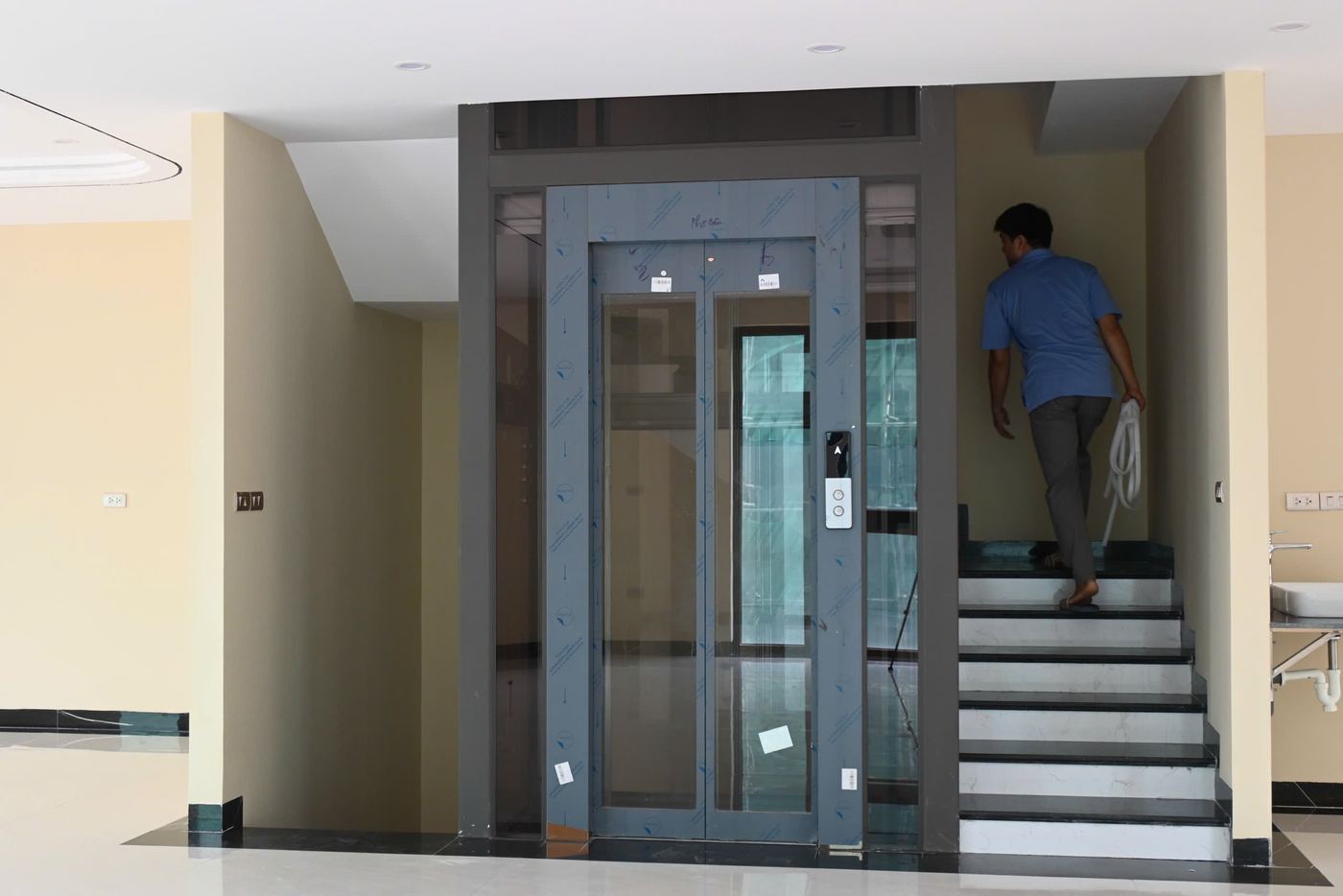
The most popular choice for new houses with a concrete shaft. The gearless machine sits inside the shaft (machine-room-less) and the cabin runs smoothly at 0.5 – 1.0 m/s, serving houses of 3 – 7 floors well.
- Fast, suited to houses with many floors
- Gearless machine, no oil changes
- Automatic rescue brings the cabin to the nearest floor in a power cut
- Cabin made to measure for the actual shaft, using every centimetre
2.2. Glass lift
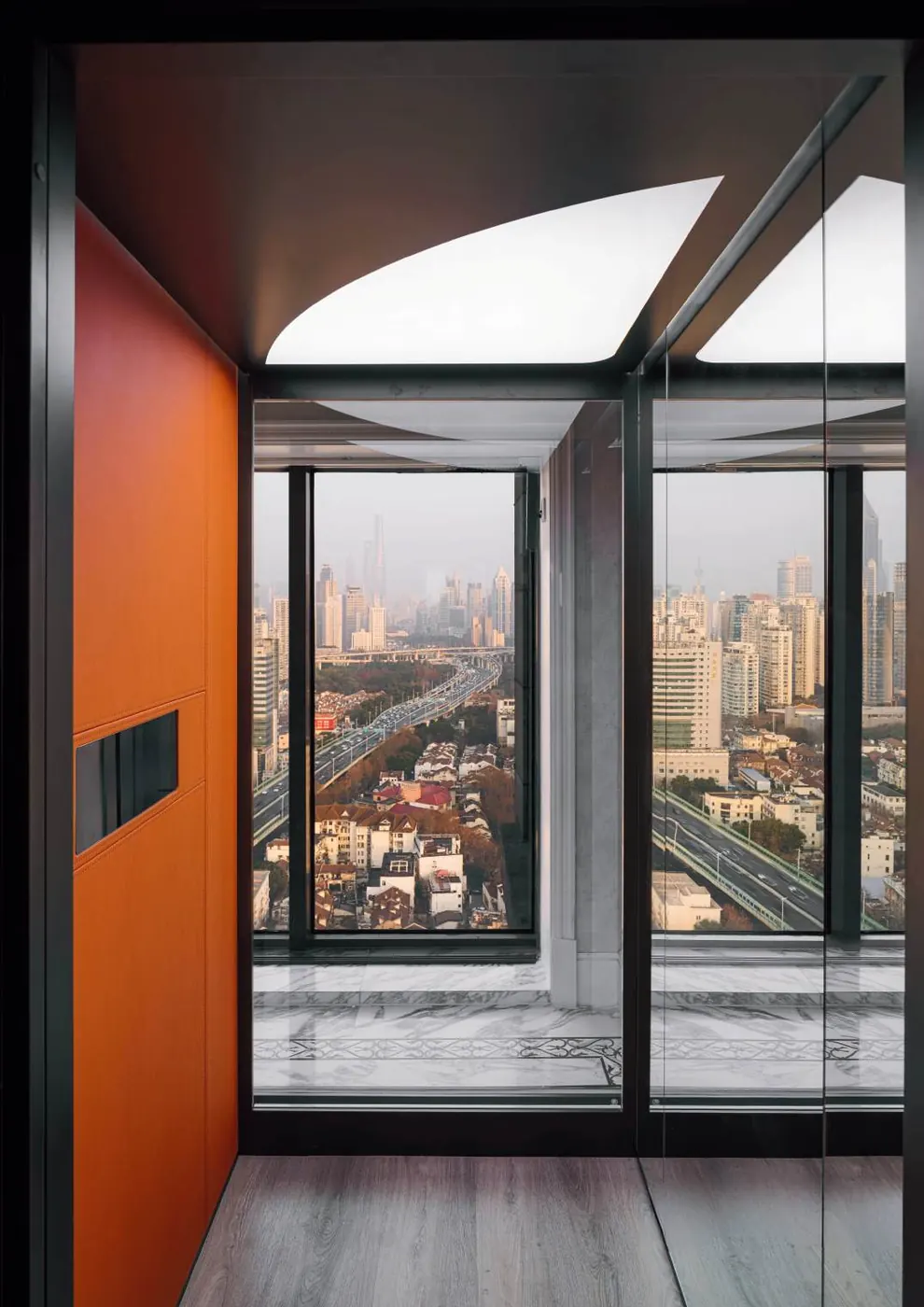
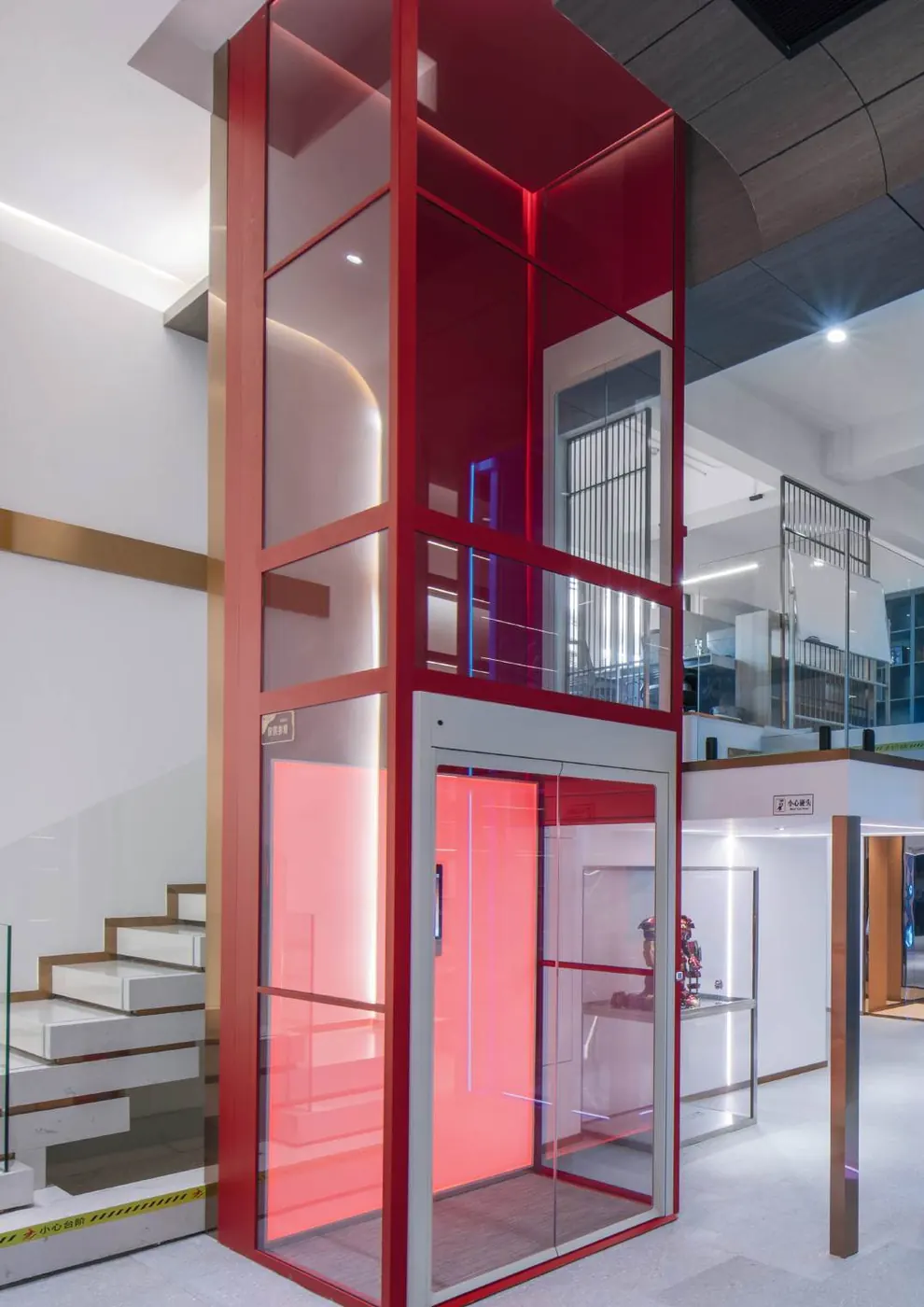
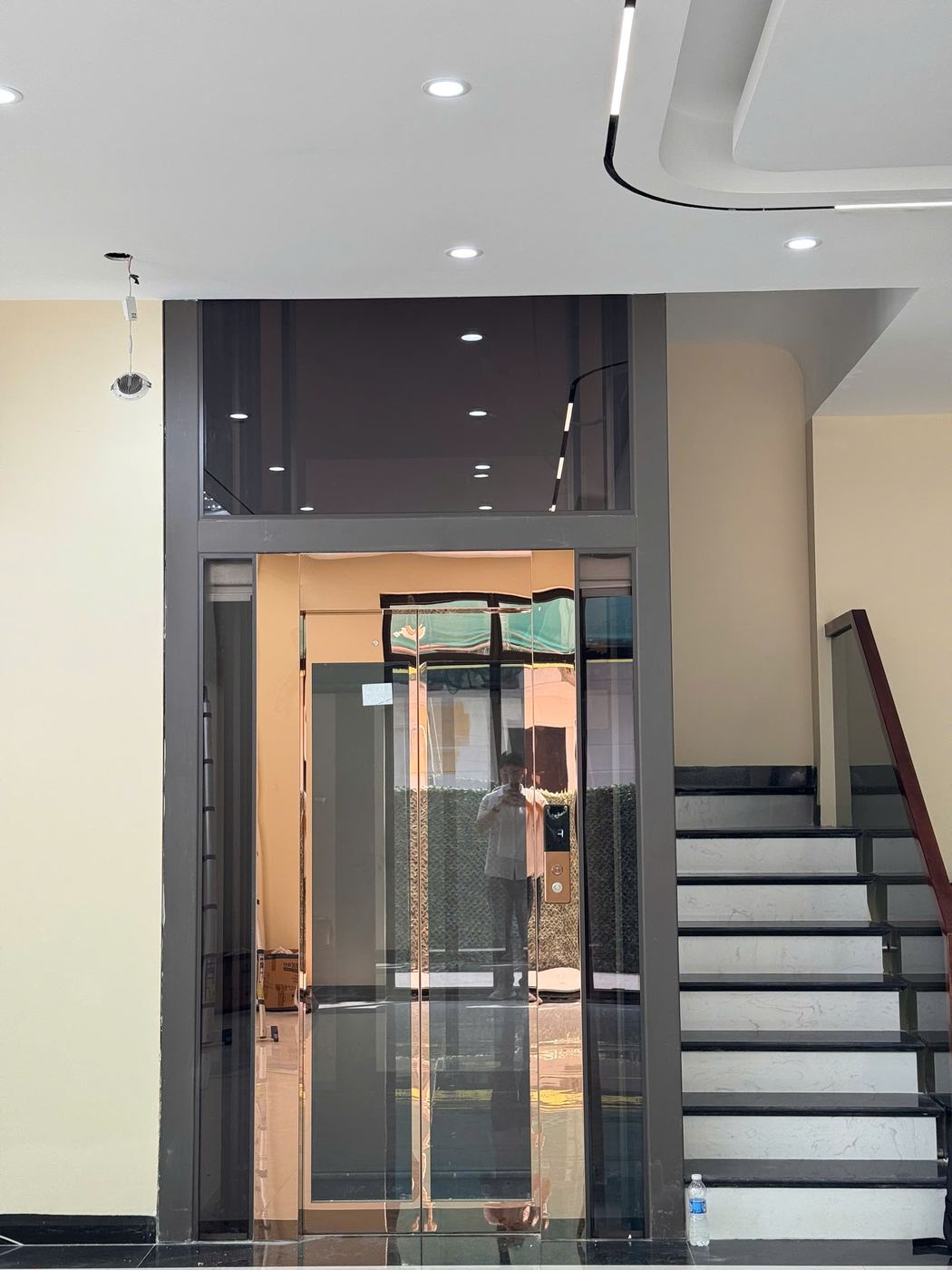
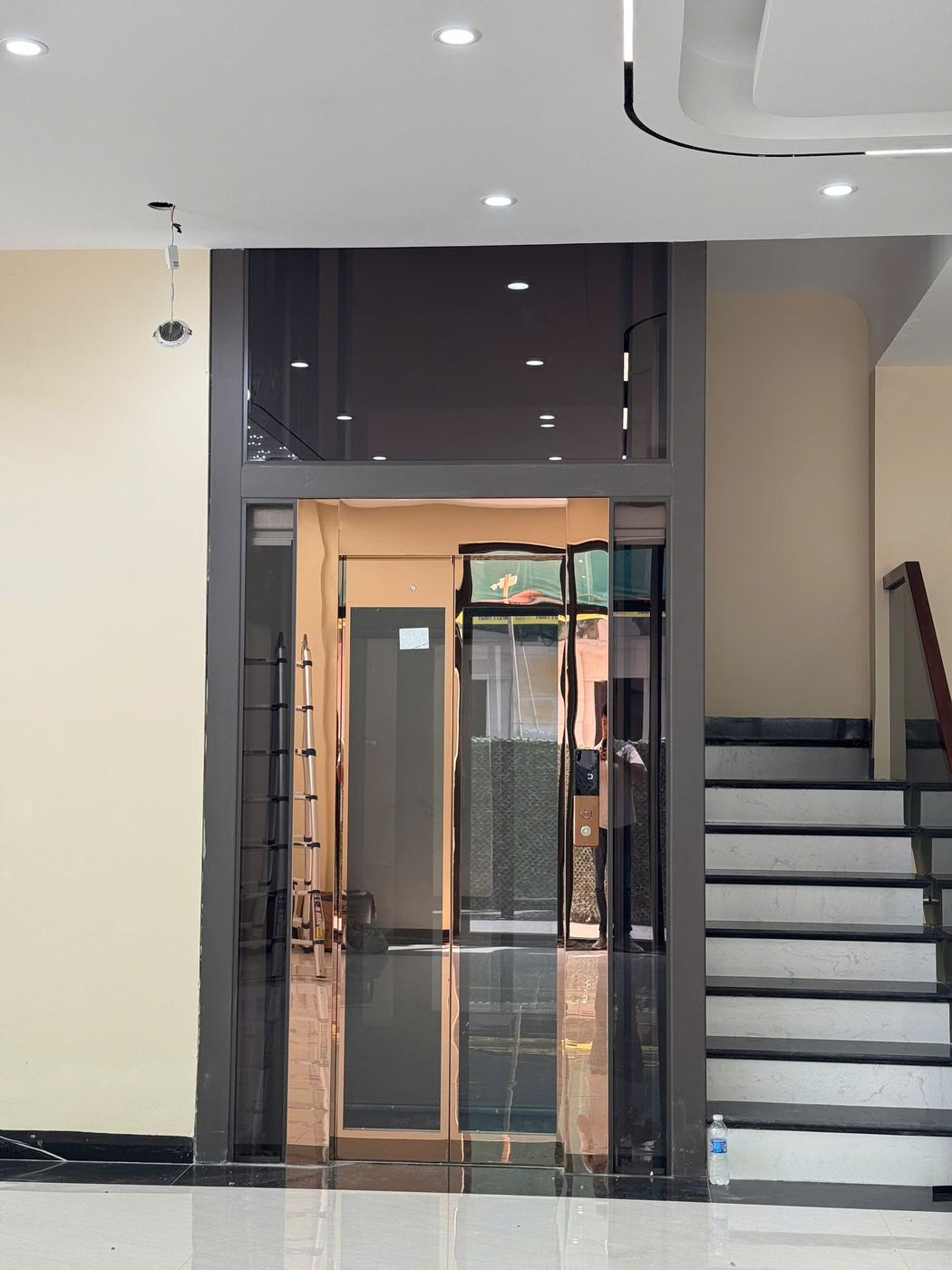
A tempered-glass shaft on a steel frame suits modern villas that want to keep the core of the house bright. A lift in the middle of the stair core becomes a decorative axis running through every floor.
- Natural light, the core of the house stays bright
- Two-ply laminated safety glass that does not shatter on impact
- Powder-coated frame in a colour that matches the architecture
- A focal point in the stairwell or light well
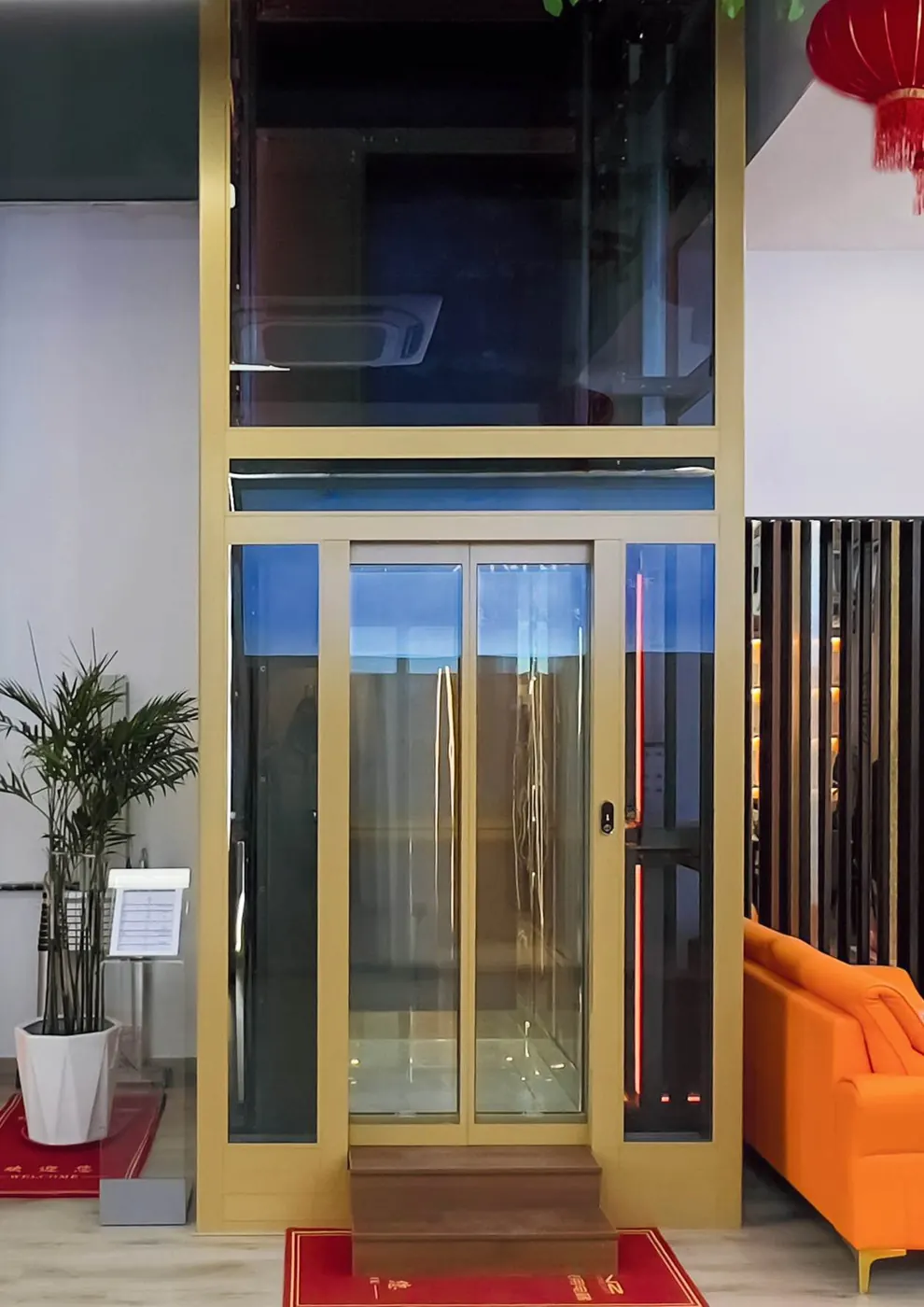
2.3. Aluminium-frame lift
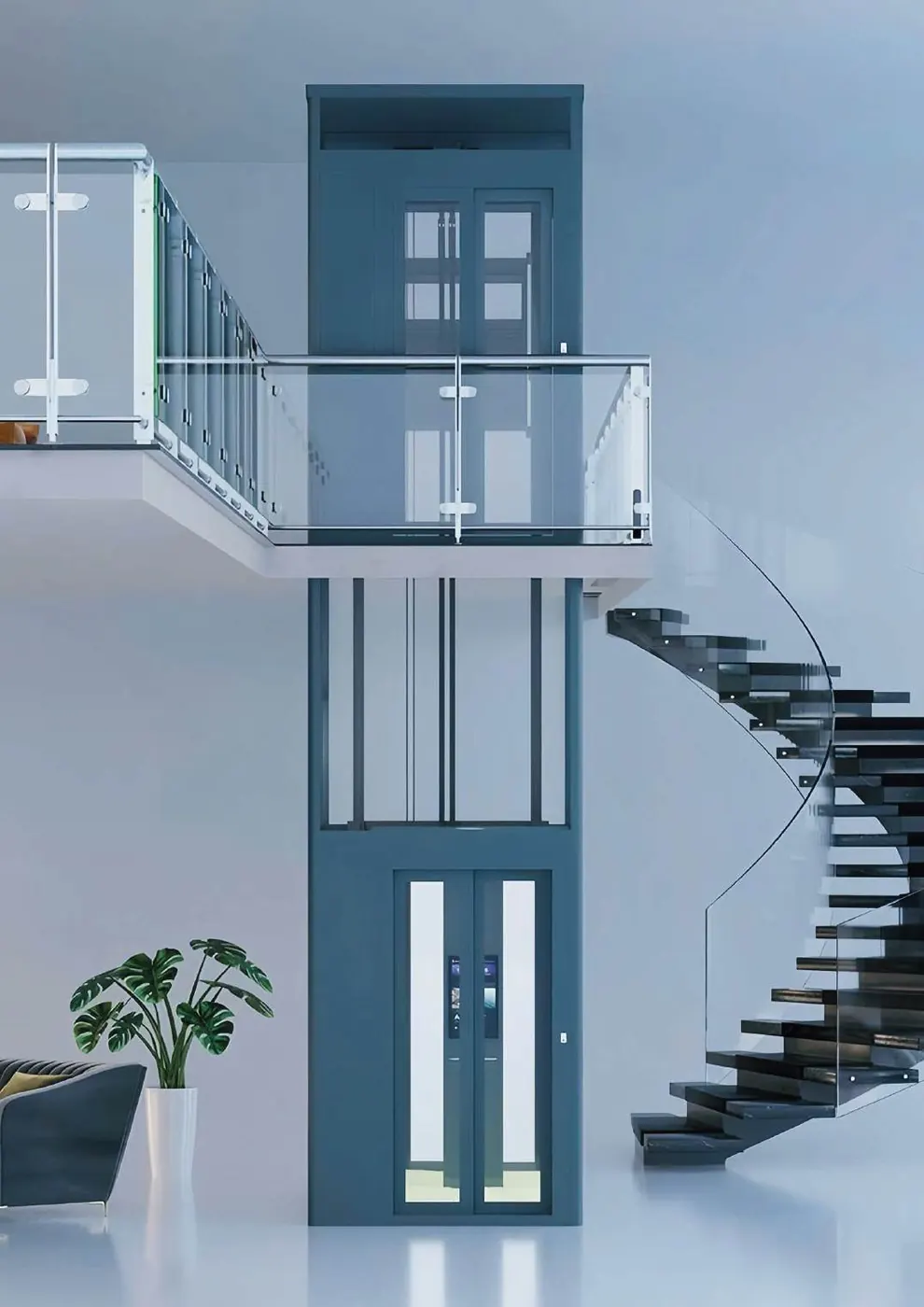
A modular shaft built from aluminium profiles, with no concrete pour. A sensible option when the villa is already finished and the owner wants to add a lift with minimal demolition.
- No concrete shaft, tidy installation
- Lightweight, less load on an existing structure
- Rust-free aluminium, suitable outdoors
- Clad in glass or aluminium composite panels as designed
View aluminium-frame lift details →
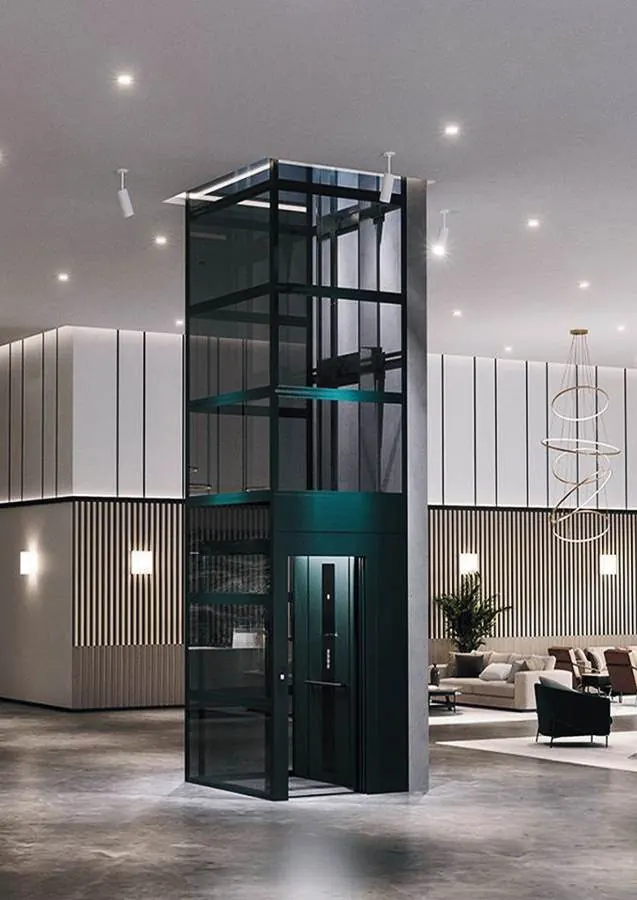
2.4. Counterweightless lift
Removing the counterweight frame gives a larger cabin in the same shaft. This line suits townhouses with a small existing shaft, or owners who want a cabin wide enough for a wheelchair without enlarging the shaft.
- A larger cabin in the same shaft: the cabin is only 350 mm narrower than the shaft
- Shallow pit, from 200 mm
- No moving counterweight, less vibration
View counterweightless lift details →
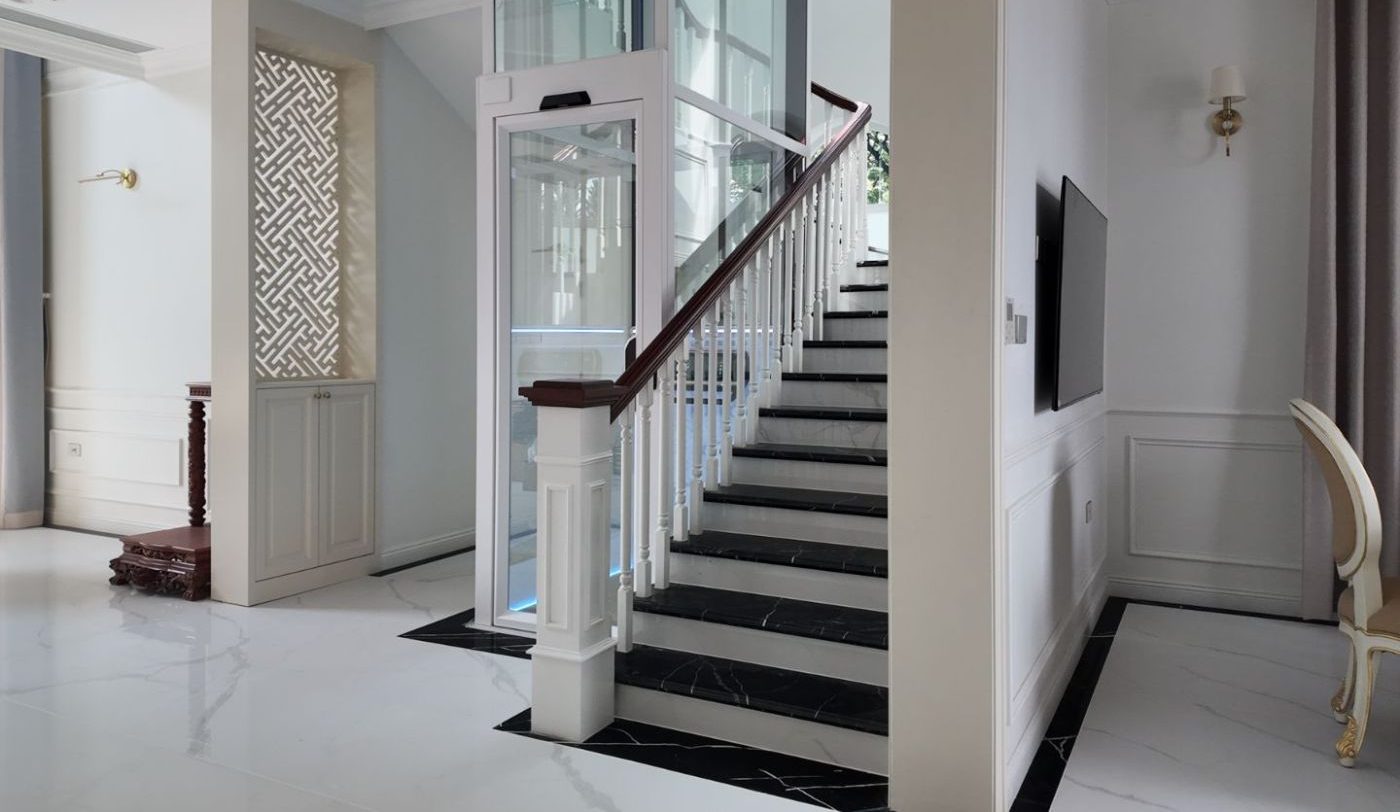
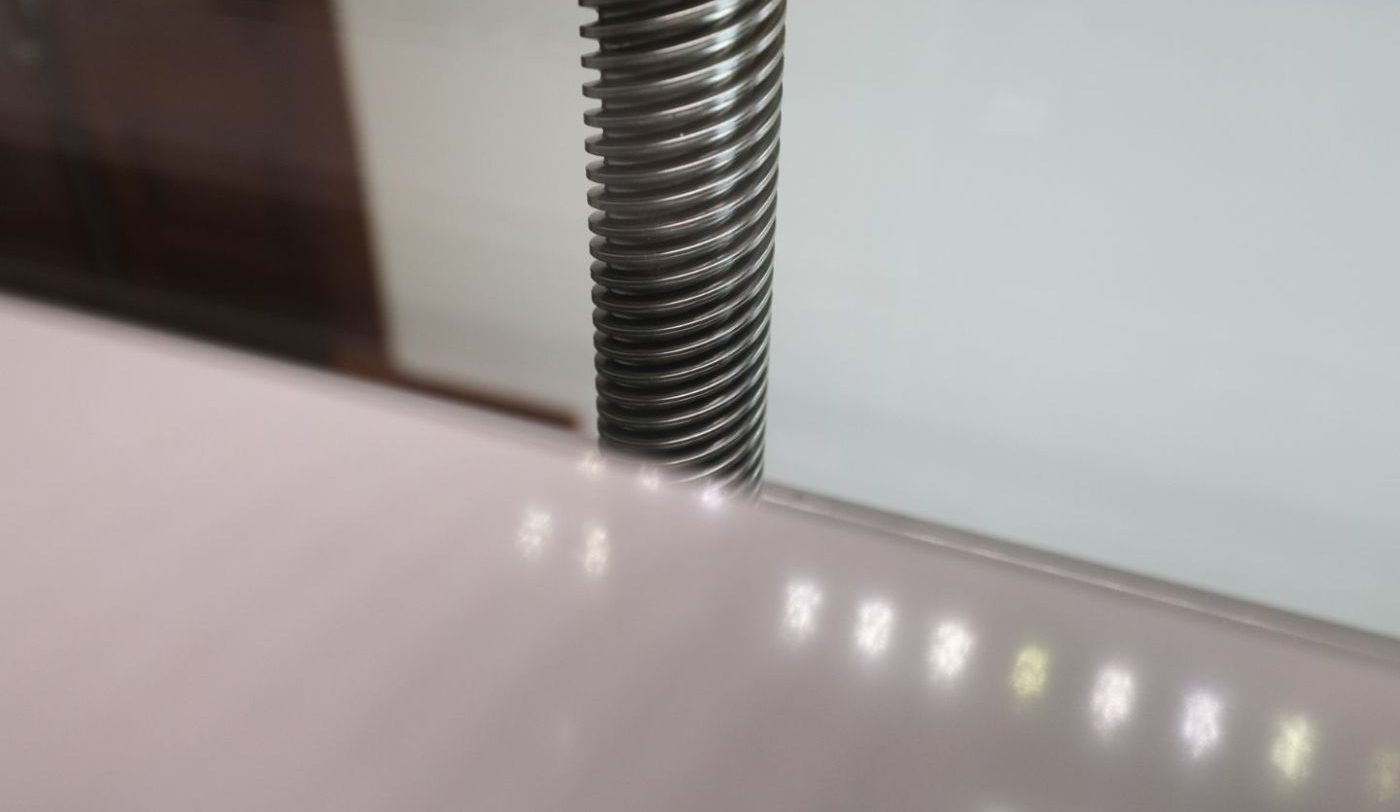
2.5. Screw-drive lift
A platform cabin that runs on a screw, with no ropes and no counterweight, and a pit of only 50 – 100 mm. Slower than a traction lift but smooth and safe, ideal for renovated homes and families with elderly members.
- Very shallow pit, can be installed on a finished floor
- No machine room, no traction ropes
- Safety nut holds the cabin if a fault occurs
- Quick installation, little disruption to daily life
View screw-drive lift details →
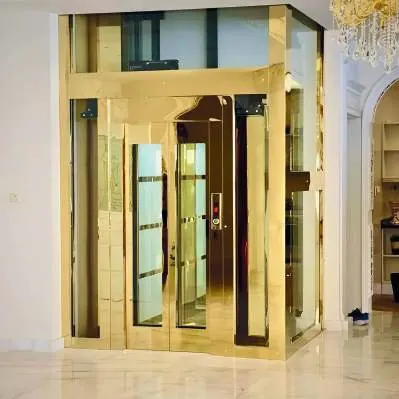
2.6. Premium cabin interiors to match the house
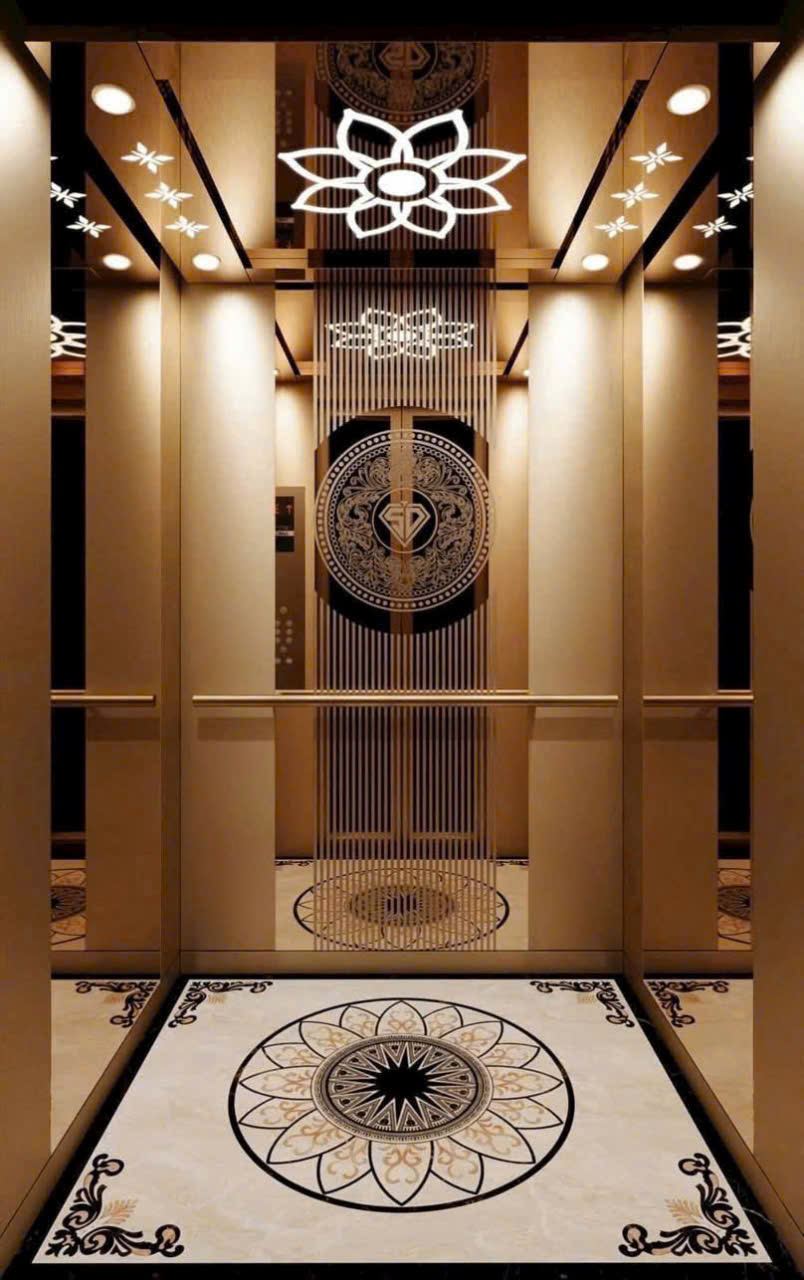
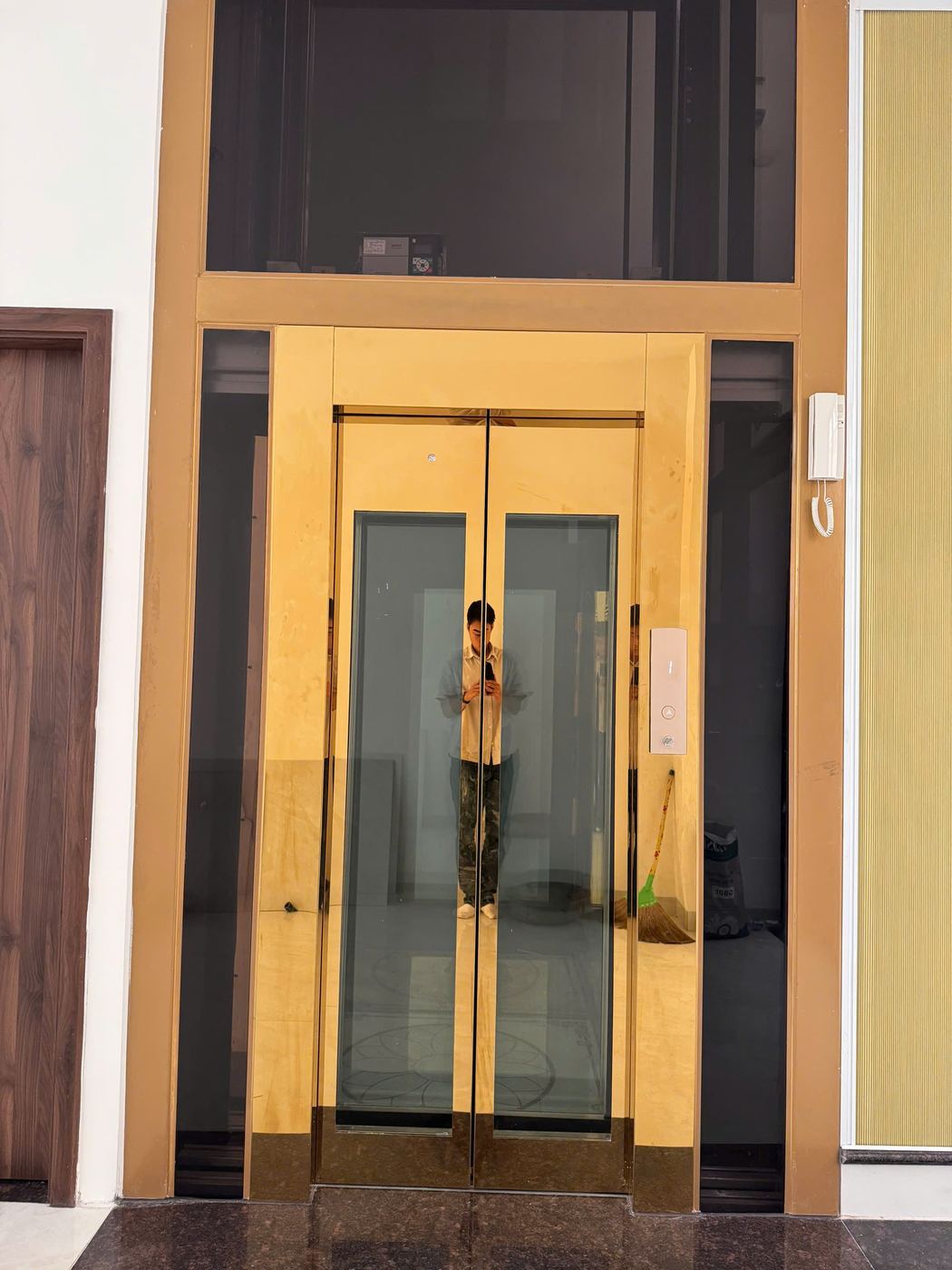
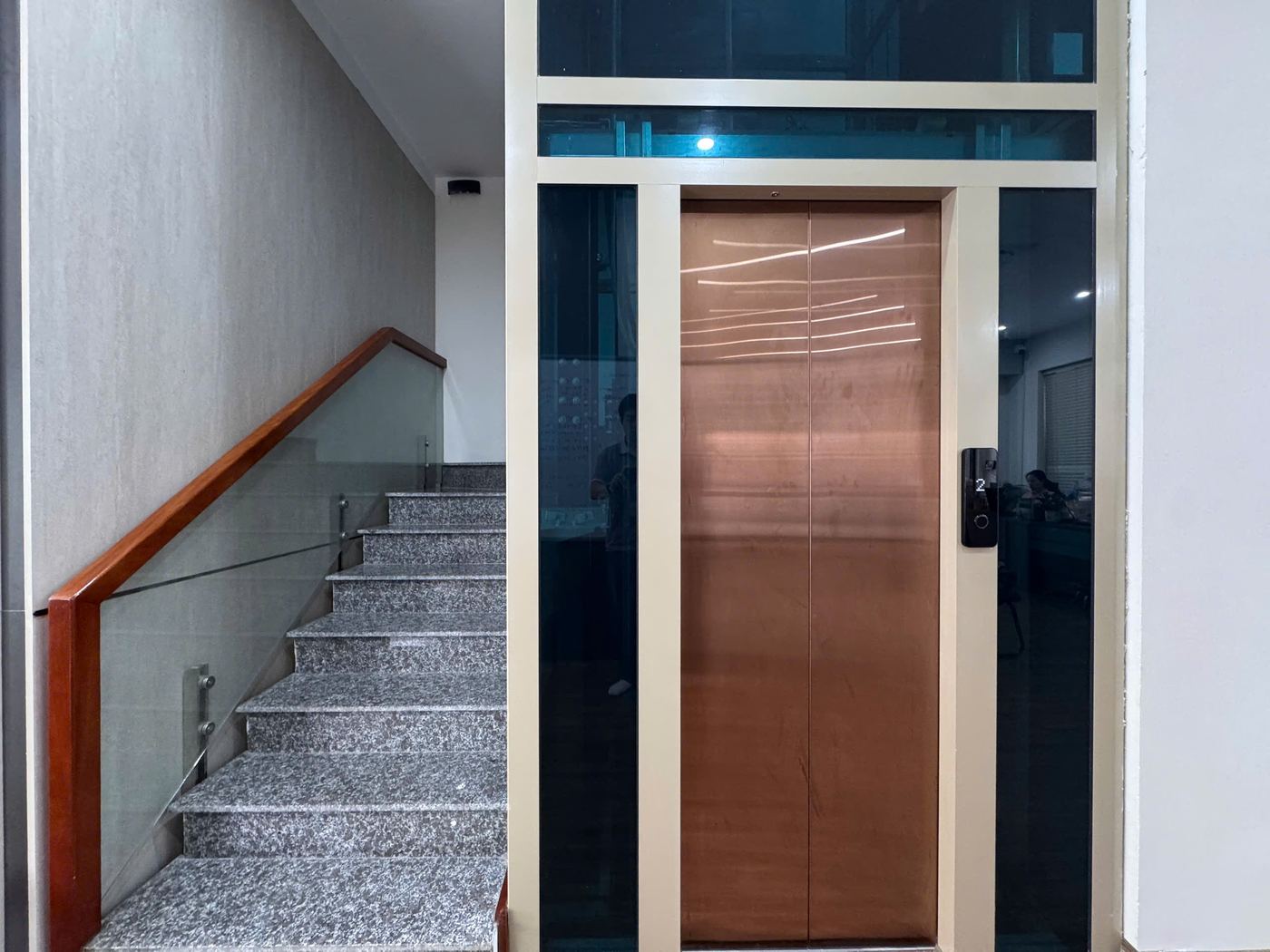
For neoclassical villas, a mirror gold stainless steel cabin, patterned LED ceiling and CNC-cut marble floor create a luxurious look in tune with the interior. For modern homes, bronze hairline stainless steel, tinted glass and indirect lighting give a cleaner feel.
3. Villa lift sizes by rated load
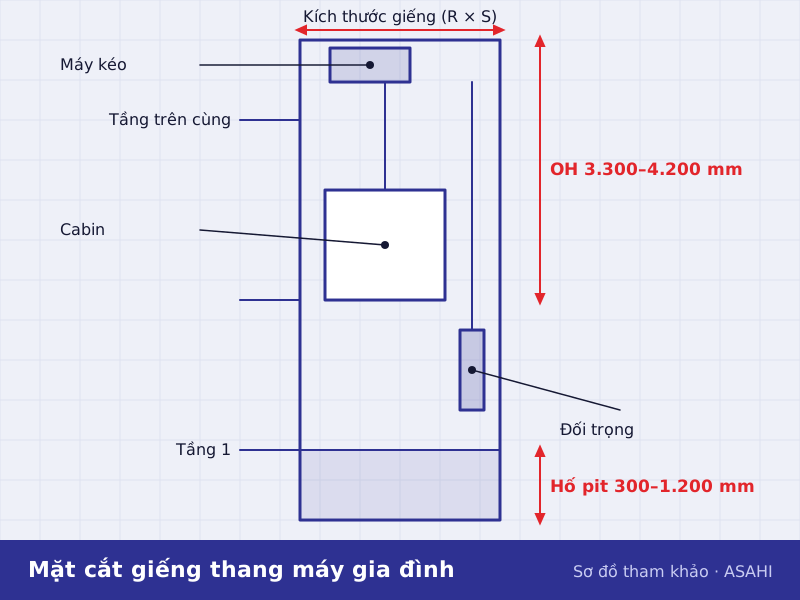
Shaft size determines how large the cabin can be, so it must be fixed at the design stage. The table below gives reference figures for traction lifts with a counterweight and two-panel centre-opening doors:
| Rated load | Persons | Cabin (R × S, mm) | Minimum shaft (W × D, mm) | Pit (mm) | Headroom (OH) from (mm) |
|---|---|---|---|---|---|
| 250 kg | 3 persons | 900 × 1.000 | 1.400 × 1.400 | 400 – 500 | 3.300 |
| 350 kg | 4 – 5 persons | 1.000 × 1.100 | 1.500 × 1.550 | 450 – 550 | 3.400 |
| 450 kg | 6 persons | 1.100 × 1.250 | 1.650 × 1.700 | 500 – 600 | 3.600 |
Reference figures. With a counterweightless or screw-drive lift, the same shaft can take a larger cabin. ASAHI recalculates for the actual shaft after the survey.
Choosing a load: families of 2 – 4 regular users choose 250 – 350 kg; larger families or households with a wheelchair should choose 350 – 450 kg for a roomier cabin.
Already know your shaft size? Use the cabin size calculator to see how wide a cabin fits for each lift line and door type.
4. Where to put the lift in a villa
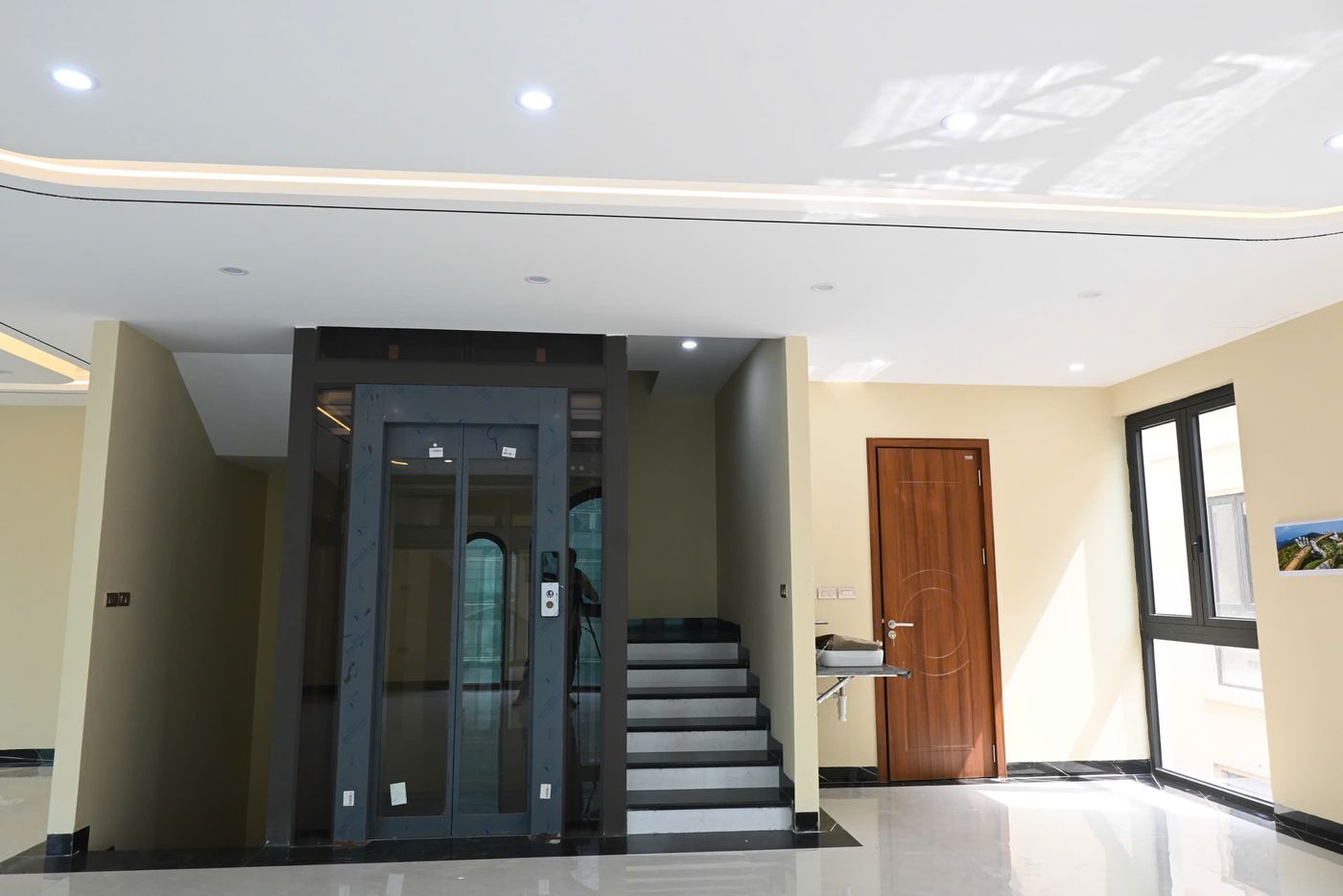
- In the middle of the stair core: the most space-efficient option; a glass lift here becomes a feature. Make sure each remaining flight of stairs is at least 900 mm wide.
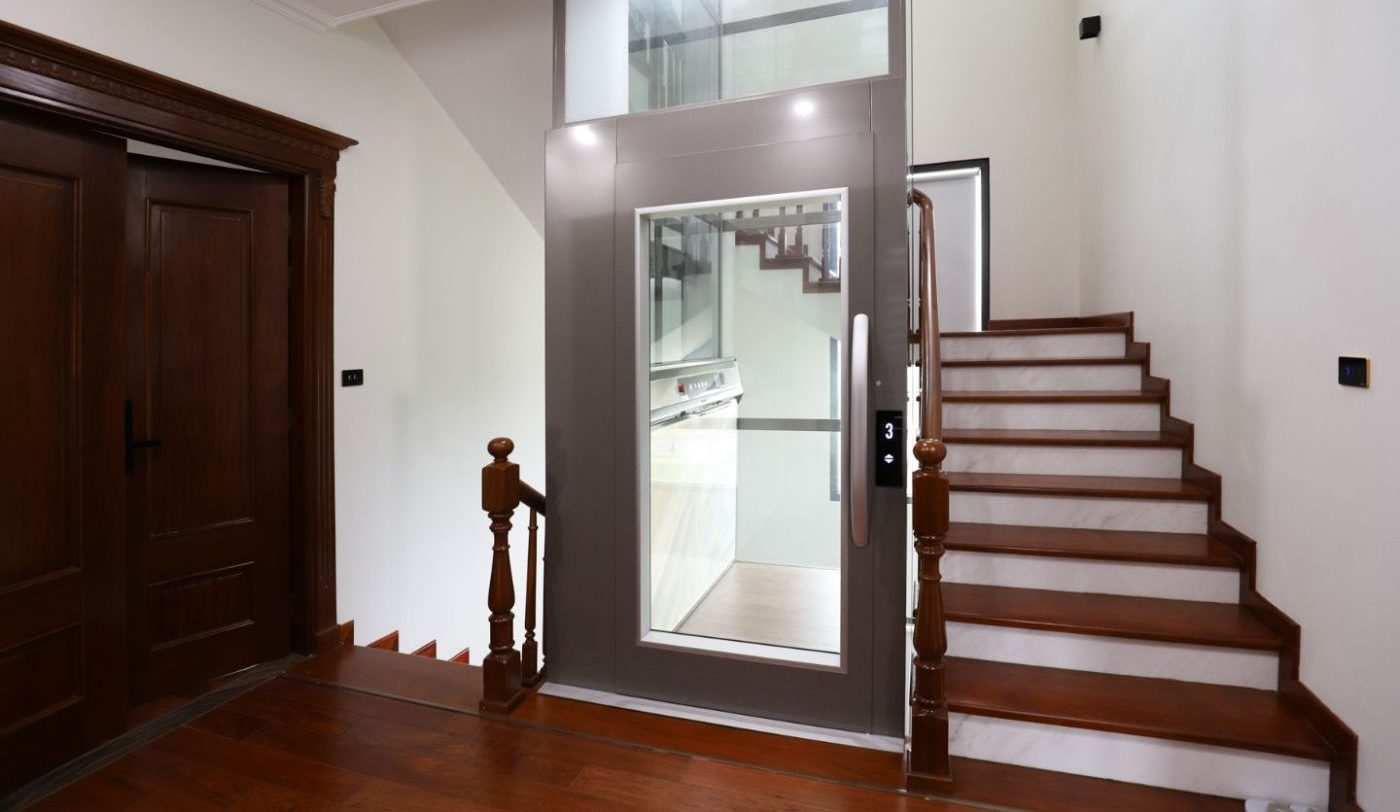
- Beside the stairs or in a corner: common in terraced townhouses, with a closed concrete shaft and landing doors opening onto each floor's hall.
- Light well or outdoors: use an aluminium or glass frame, waterproof the top of the shaft and choose weather-resistant equipment.
5. Cabin interiors and landing doors
Cabin walls: hairline stainless steel is durable and easy to clean; mirror gold or etched patterned stainless steel for a luxurious style; tempered glass for a sense of space; wood cladding for warmth.
Cabin floor: granite is the most durable; patterned marble suits neoclassical villas; engineered wood or stone-look PVC keeps the cabin light.
Landing doors: match the colour of the doors and balustrades on each floor. Framed glass doors let you see the cabin, useful in homes with young children.
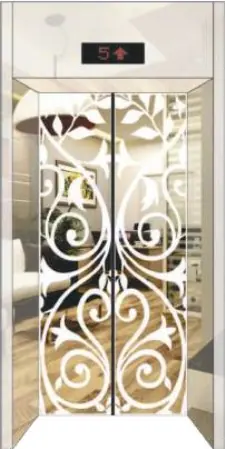
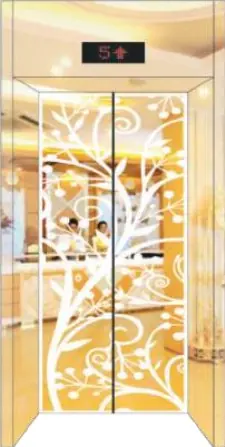
See all cabins, patterned landing doors, ceilings, floors and materials in the design library. Send the design codes to ASAHI for a quote that matches your choice.
6. Japanese-configured joint venture or fully imported?
A fully imported lift is manufactured as a complete set abroad and suits owners who prioritise a brand. A Japanese-configured joint-venture lift uses core equipment to Japanese standards, with the cabin and doors fabricated locally to the actual dimensions. For most villas it is the balanced choice: durable operation, controllable delivery, and spare parts and maintenance available on the spot.
| Criteria | Japanese-configured joint venture (ASAHI) | Fully imported |
|---|---|---|
| Construction | Japanese-configured core equipment; cabin, landing doors and shaft frame fabricated to the actual dimensions | Manufactured as a set in a foreign factory, imported for installation |
| Delivery time | Planned around the construction schedule | Depends on the factory schedule and international shipping |
| Maintenance and parts | Genuine spare parts stocked in Vietnam, technicians based in the same urban area | Parts ordered from the manufacturer, longer waiting times |
| Cabin size | Made to fit the actual shaft | Manufacturer's standard sizes |
| Investment cost | Reasonable | Higher |
| Best for | Most townhouses, villas and buildings | Owners who prioritise an imported brand |
7. What drives the cost of a villa lift
- Lift type and origin: Japanese-configured joint venture or fully imported.
- Rated load and number of stops: more floors means more rails, ropes and landing doors.
- Shaft: an existing concrete shaft, or a new steel, aluminium or glass frame.
- Cabin interior and landing doors: hairline stainless steel, mirror gold stainless steel, glass, stone flooring.
- Extra features: key-card access, three-panel side-opening doors, touch control panel.
For an exact figure, ASAHI surveys your site free of charge and sends an itemised quote. Request a quote.
8. Preparing for a villa lift installation
8.1. Choose the lift type at the design stage
Many owners wait until the house is finished to choose a lift, by which time the shaft has been built to the wrong size, the pit is too shallow or the top floor lacks headroom. Talk to the lift supplier as soon as the architectural drawings exist to get the shaft requirements.
8.2. Shaft and pit during the structural phase
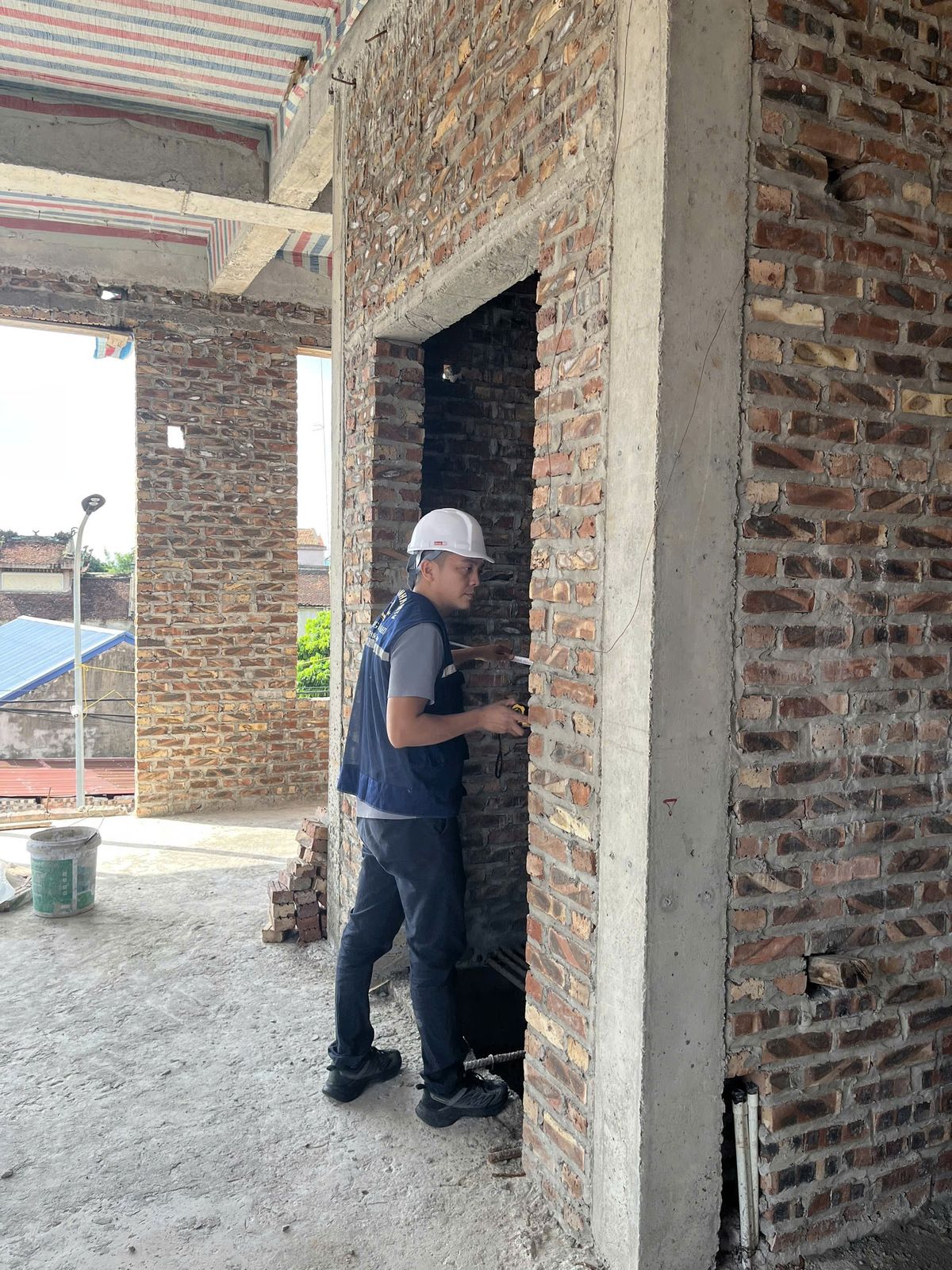
- Shaft walls plumb, with only small deviations over the full height; clear internal dimensions as drawn.
- Pit deep enough, with a flat floor and thorough waterproofing: standing water in the pit is the most common defect in townhouses.
- Provide a beam or lifting hook at the top of the shaft for hoisting the machine.
- Leave landing door openings at the correct finished floor level on each floor.
8.3. Power supply for the lift
Run a dedicated supply from the main board to the top of the shaft, with its own circuit breaker and an earth conductor. Decide in advance between single-phase and three-phase power according to the chosen lift.
8.4. Inspection and regular maintenance
The lift must be inspected before it is put into service. After handover, regular maintenance catches wear on brakes, ropes and doors early. ASAHI provides a 24-month warranty and free maintenance for the first 12 months.
9. Frequently asked questions
Does a 3-storey villa need a lift?
For families with elderly members, young children or who often carry things upstairs, a lift makes daily life noticeably easier from 3 floors up. If you are not installing one yet, leave space for the shaft and pit during construction so it can be added later without demolition.
How long does a villa lift installation take?
Usually 30 – 45 days from the time the shaft meets the technical requirements, including installation, test runs and inspection.
Can a lift be added to a finished house without a shaft?
Yes. An aluminium-frame lift or a screw-drive lift with a modular shaft and shallow pit can go in a corner, in the middle of the stairs or on an outside wall with minimal demolition.
Can a home lift run on single-phase power?
Most low-capacity home lifts can run on 220 V single-phase power. Higher-capacity or faster lifts should use 380 V three-phase power for stable operation.
Does a home lift need to be inspected?
Yes. Lifts are equipment with strict occupational safety requirements; they must be inspected before being put into service and re-inspected periodically.
How often should a lift be maintained?
A home lift should be serviced every 1 – 2 months depending on use, checking the brakes, ropes, doors and rescue system.
10. ASAHI – villa lift installer
More than 150 ASAHI lifts are running or being installed in townhouses and villas at Vinhomes Ocean Park 1, 2, 3 and Vinhomes Global Gate. ASAHI engineers work on site from the structural phase, so shafts are built correctly and lifts are finished on schedule.
- Japanese-configured joint-venture lifts; fully imported lifts when the customer requests.
- Cabins and landing doors made to measure for the actual shaft.
- Genuine spare parts stocked in Vietnam, technicians based in the same urban area.
- 24-month warranty, 12 months of free maintenance, installation in 30 – 45 days.
Contact: CÔNG TY TNHH MỘT THÀNH VIÊN THANG MÁY ASAHI (ASAHI ELEVATOR ONE MEMBER COMPANY LIMITED)
- Hotline: 0988 621 262 · 0842 302 389 · 0989 419 927
- Ocean Park office: Phố Biển 19-24, Vinhomes Ocean Park 3, Nghĩa Trụ, Hưng Yên
- Global Gate office: Thời Đại 1-02, Vinhomes Global Gate, Cổ Loa, Hanoi

Engineers who survey and install home lifts at Vinhomes Ocean Park and Vinhomes Global Gate. They measure shafts, advise on lift types and supervise installation in person.